
Resources
News and Resources
Explore the latest news, resources, and publications from Conservation Metrics.
-
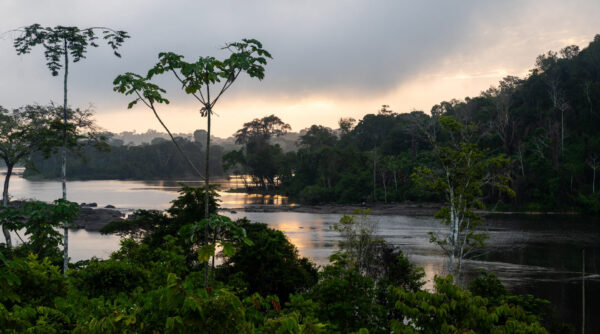
How Indigenous Peoples in Suriname Co-Created a Digital Platform to Advance Guardianship of Their Territory
“The question that was always asked of us: ‘You have such a big territory and if you get land rights, how are you going to manage that?’” recounted Andre Verhoogt, the Mulokot Foundation’s Managing Director. “The answer that the Indigenous would give and still give is: ‘We have been managing it for thousands of years.’”
Translating their ancestral guardianship in ways western governments or institutions could understand required new tools. This was the impetus for Guardian Connector: to co-create an open-source data integration and monitoring platform that positions Indigenous Peoples to collect, manage and own data about their territories on their own terms.
-
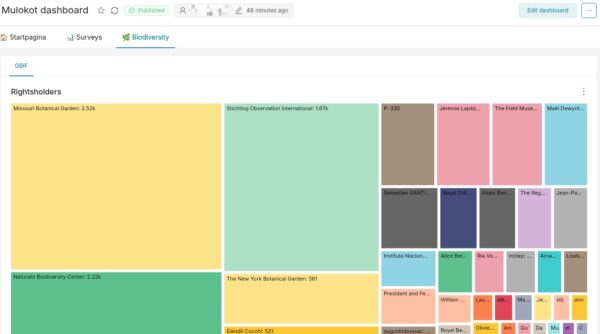
“Who else has data from our territory?” Working with the Wayana on biodiversity data
Sometimes a very specific question from a partner opens up a much bigger area of work.
That happened this week with the Mulokot Foundation in Suriname. What started as a conversation about iNaturalist turned into a broader exploration of biodiversity data from the Wayana Territory: where it goes, who holds it, who has collected it, and how communities can have greater visibility and control over it.
It also became a good example of how we work at Conservation Metrics: a combination of advisory support, hands-on technical accompaniment, and tool building, all emerging from concrete partner needs.
-
AI and Data Sovereignty: Emerging Technologies and Indigenous Governance
AI arrives as land, water and power.
Data centres are being built on and next to Indigenous lands. One AI data centre can draw 100 megawatts of electricity, as much as 100,000 homes use at the same time, and around 2 million litres of water a day for cooling. Worldwide, data centres are expected to use more than twice as much electricity in 2030 as they did in 2024.
They also need minerals. Of the world’s energy transition mineral projects, 54 percent are on or near the lands of Indigenous Peoples. AI is now being used to find new deposits as well.
On 10 September, six speakers took this apart from six different places.
-

Data Shows Endangered Palau Ground Doves Swiftly Recovering After Successful Palauan Island Conservation Effort
Seabirds, the IUCN Endangered Palau Ground Dove (Pampusana canifrons), and other native species have significantly increased in number thanks to a successful restoration campaign on Ulong Island, Republic of Palau in the Western Pacific Ocean. The acoustic data, processed by Conservation Metrics, shows a dramatic increase in bird calls across the project site. Trail cameras also captured footage of Endangered Palau Ground Doves safely navigating the forest floor.
-

Return of Rare Species Underscores Importance of Restoring Sacramento River Wildlife Corridors
Blending a century of wildlife investigations on the Sacramento River with modern monitoring technology and techniques, like installing cameras and autonomous recording units (ARUs), is giving conservationists a clearer picture of the wildlife that once thrived in the Sacramento River Wildlife Area, what disappeared, and what’s now returning.
-

Friends, not foes. Central Valley bats can reveal much about our region
With key funding from the California Wildlife Conservation Board, River Partners has partnered with Bat Conservation International and Conservation Metrics Inc. to study bats in the Central Valley.
-

What Bats Are Telling Us about Life in the Central Valley
Together, with renowned bat experts, River Partners looks to learn more about how bats live and how we can help them thrive.
-
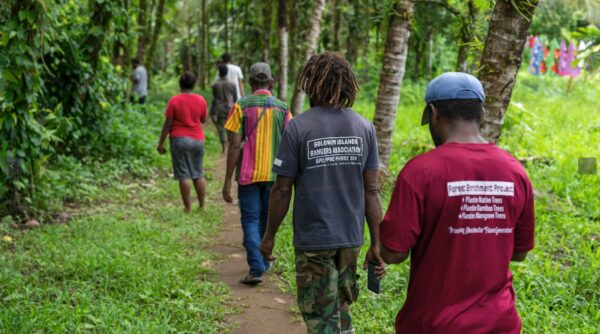
Sky Aelans: A Community-Led Model of Guardianship for the Future
Climb above 400 meters in the Solomon Islands and the air changes. Clouds drift closer. Trees grow dense with moss, and the ridges carry an unmistakable weight of history. These are the Sky Aelans—sacred highlands that hold ancestral shrines, origin stories, and the cultural identity of the people who live nearby. Protecting them means safeguarding both biodiversity and culture.
-
Announcing the Next Wave of Project Centinela Biodiversity Sites
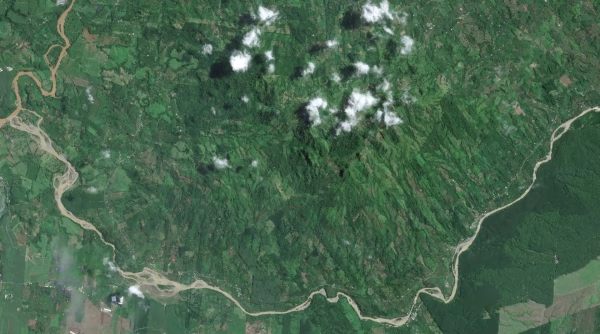
In late 2024, Planet launched a new impact program called Project Centinela to help leading scientists, conservationists, and stewards monitor and safeguard 50 of the world’s vulnerable biodiversity sites. Project Centinela provides a three-year “biodiversity subscription” of Planet imagery and analytics for those on the frontlines of conservation around the world. We consider the program a core element of Planet’s contributions to the Kunming-Montreal Global Biodiversity Framework, and an initiative that helps us fulfill our Public Benefit Corporation purpose. We inaugurated the program with an initial set of ten sites in 2024, and now we’re proud to welcome another five sites into the program.
-

Introduction to Forest Mapping and Monitoring Tools for Indigenous Peoples and Local Communities
While there is a wealth of spatial data and tools available to support forest protection, these resources often remain inaccessible to the communities that need them most. To bridge that gap, Conservation Metrics, along with UNDP, the Equator Initiative, NASA, Nature4Climate, Awana Digital, Rainforest Foundation US and Global Forest Watch, developed an online, self-paced certificate course to equip Indigenous and frontline communities with foundational knowledge and practical skills to map, monitor, and manage their forests.
-

One Scientist’s Valiant Mission to Save Two of Hawaii’s Endangered Seabirds
On the mountainous island of Kauai, elusive shearwaters and petrels burrow deep in the forested terrain. Saving them requires a radical effort, led by a man who is no less extreme.
-

How eavesdropping on elephants is keeping them safe
Conserving endangered wildlife is an expensive, time consuming job, but new technology may make protecting animals, and catching the poachers who threaten them, easier.